
Strawberry Dango & Hanami Dango
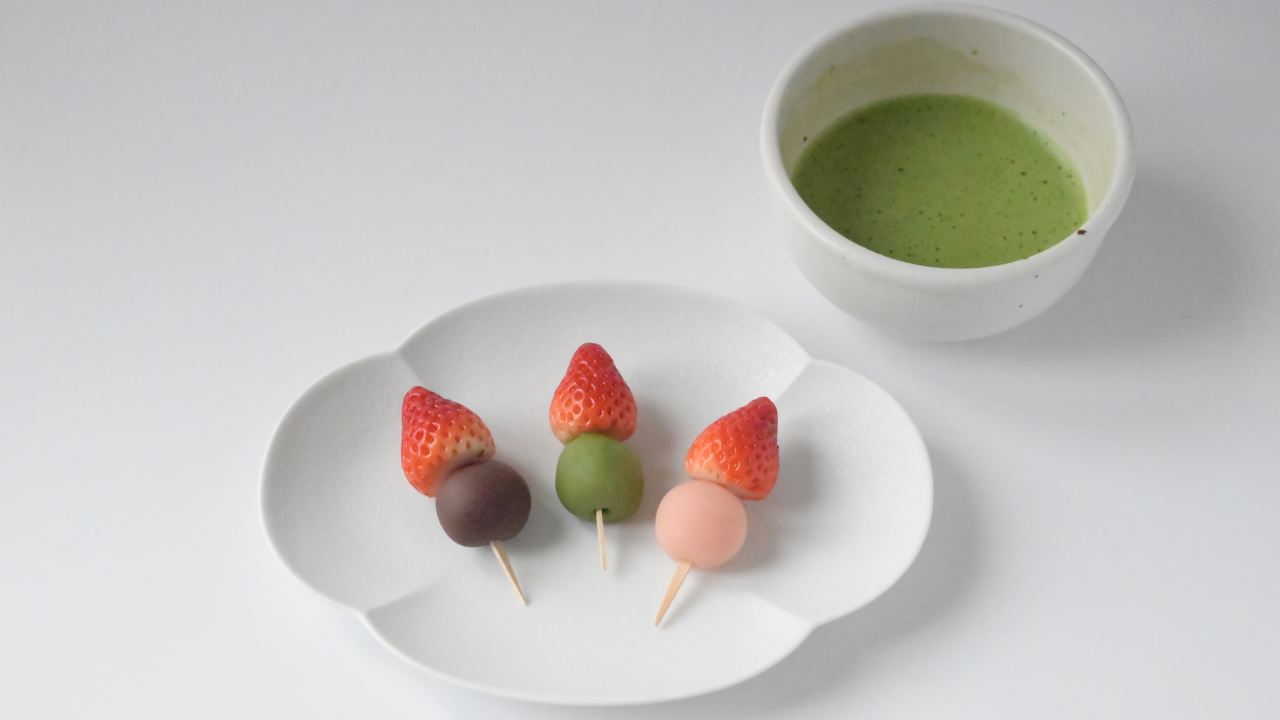
Two Japanese Spring Sweets You Can Make at Home
Spring in Japan means cherry blossoms, gentle sunshine, and beautiful seasonal sweets enjoyed with tea.
Among the most loved treats during this season are Hanami Dango, the classic tri-color dumplings, and a modern favorite, Strawberry Dango, topped with fresh, juicy strawberries.
Interestingly, strawberries in Japan are at their peak from winter through spring, the opposite of many other countries. Here in Nara, where I live, we are proud of a special variety called Kotoka (古都華), which means “beauty of the ancient capital.”
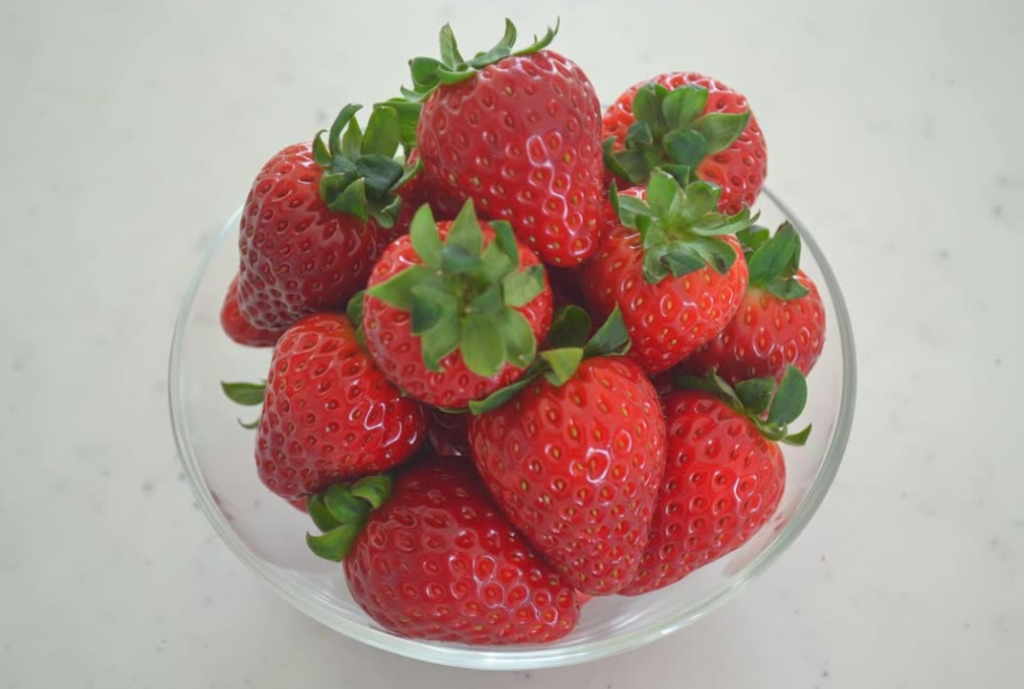
Kotoka strawberries have a slightly firmer texture compared to other varieties, but once you bite into them, you’ll be surprised by their incredible juiciness, sweetness, and gentle tang.
Combining traditional wagashi, made from mochi and sweet bean paste, with fresh strawberries creates a delicious harmony — a sweet you might never have imagined, yet feels perfectly natural once you taste it.
Today, let’s explore both sweets and how you can enjoy them at home.
What Is Dango?
Dango are soft, chewy dumplings usually made from rice flour. They are typically served on skewers and enjoyed year-round with a variety of toppings and flavors.
In spring, however, dango take on a special seasonal meaning, often prepared in different colors and styles to celebrate the changing season.
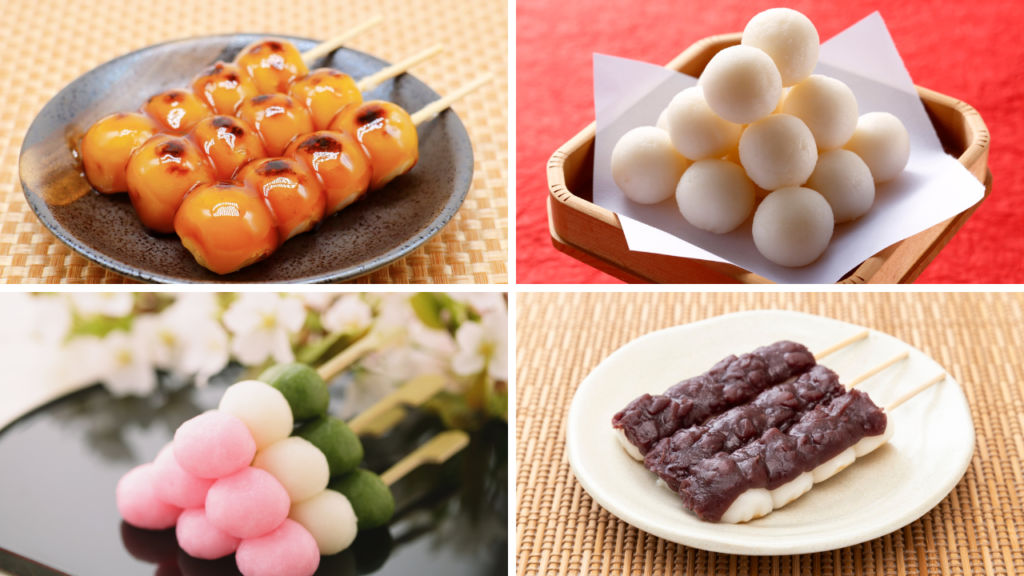
Hanami Dango — A Cherry Blossom Tradition
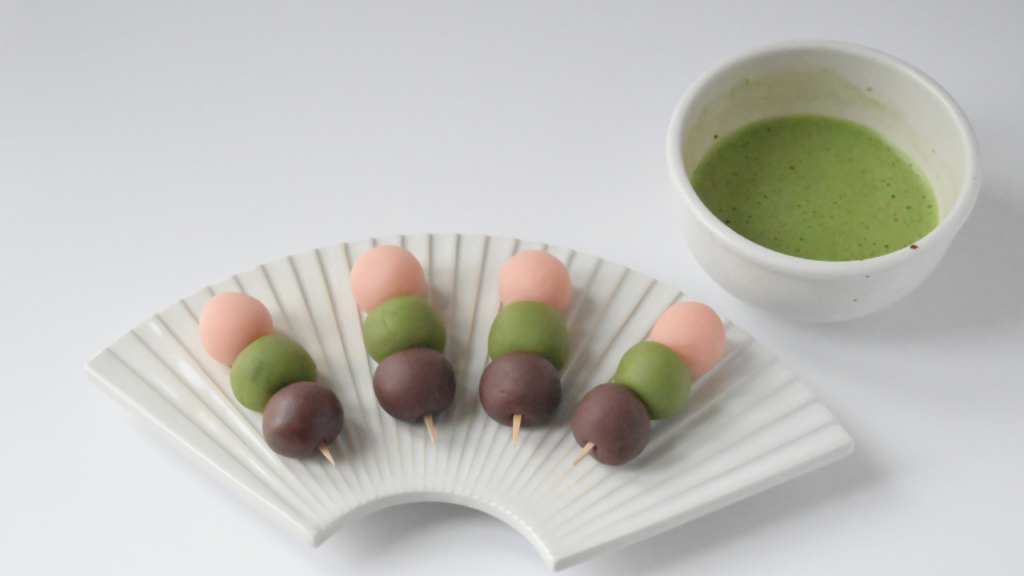
“Hanami” means flower viewing, and Hanami Dango are traditionally enjoyed while watching cherry blossoms bloom.
The dumplings are often colored:
- 🌸 Pink — representing cherry blossoms
- 🤍 White — lingering spring snow
- 🌱 Green — fresh spring grass
In some regions and home variations, the colors also symbolize nature’s cycle, including the fertile soil that supports new growth.
In this version, one dumpling is covered with red bean paste, giving it a darker color that represents rich, fertilized soil that brings a good harvest. It adds both meaning and a delicious sweetness.
Their gentle sweetness pairs perfectly with matcha, making them a beloved seasonal snack throughout Japan.
Traditionally, Hanami Dango are made from rice flour or mochiko, but here we use nerikiri for a softer, more refined texture.
Strawberry Dango — A Fresh Spring Twist
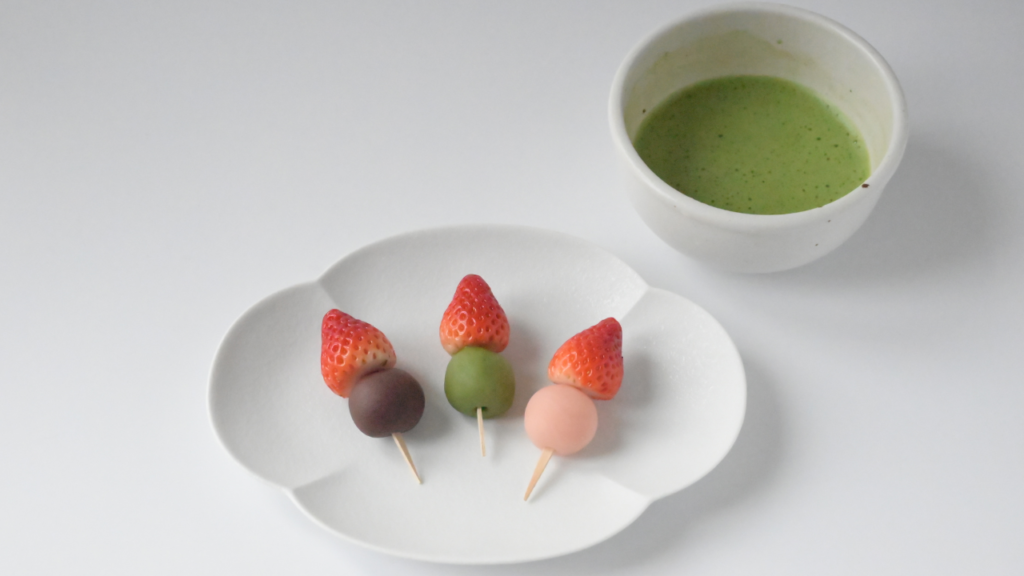
A newer and very popular variation is Strawberry Dango, where fresh strawberries are paired with dango and wrapped or decorated with sweet bean paste or nerikiri.
The combination is delightful:
• juicy, slightly tart strawberries
• chewy dumplings
• smooth, delicate sweetness of bean paste
Simple, elegant, and perfect for spring gatherings.
What Is Nerikiri?
For this recipe, we use nerikiri, a traditional Japanese wagashi dough.
Traditionally, nerikiri is made by kneading together smooth white bean paste and soft mochi dough. However, preparing mochi dough properly takes extra time and careful cooking, and, you end up with more than you need.
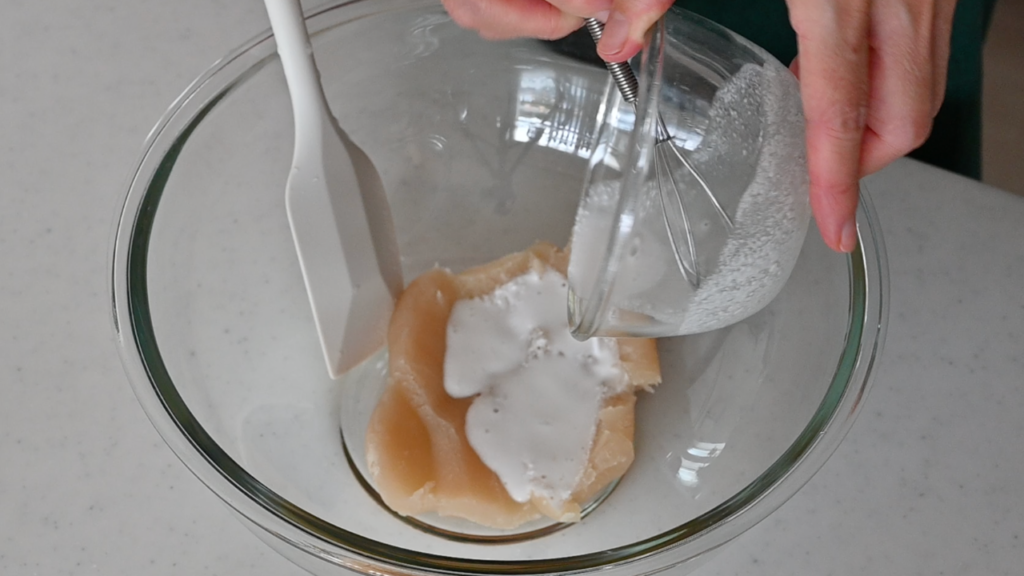
In this version, we make it more easily at home by adding mochiko dissolved in water to white bean paste, then cook in the microwave. Mix until smooth. This shortcut creates a similar texture while keeping the process simple and accessible. (See Recipe below)
Nerikiri has a silky, slightly bouncy texture that can be shaped into beautiful seasonal designs. Because of its elegance, nerikiri sweets are often served in tea ceremonies, where appearance and seasonality are just as important as taste.
In this recipe, a hint of food coloring gives the dough a gentle sakura pink, bringing a soft spring feeling to the sweets.
A Sweet Moment of Spring
Whether you choose colorful Hanami Dango or fresh Strawberry Dango, both sweets celebrate the same idea — enjoying the quiet beauty of the season through simple, joyful treats.
Make them for a tea break, a picnic, or simply to bring a little Japanese spring into your home.
And when you take that first bite, imagine cherry blossoms gently falling around you.
Ingredients
Equipment
Method
- Prepare the Nerikiri DoughDissolve shiratamako or mochiko in water. Add the white bean paste and mix until completely smooth.Microwave at 600W for 1 minute, then mix well so the dough cooks evenly. Repeat this process two more times, mixing thoroughly each time, until the dough is cooked and no longer sticks to your fingers when touched.The finished dough should have a texture similar to soft play dough.Divide the dough into two portions.Add matcha powder to one half and mix well until evenly colored.Add a tiny amount of red food coloring to the other half and mix until it becomes a gentle sakura pink. Set aside.
Prepare Nerikiri with Red Bean Paste
Prepare another batch in the same way using red bean paste instead of white bean paste.Since red bean paste usually contains more moisture, microwave and mix one additional time until the dough reaches the same smooth, non-sticky consistency.Shape the Dough
Allow the dough to cool to room temperature. Wrap in plastic and shape into a cylinder.Cut each cylinder into six equal pieces, then roll each piece into a smooth ball.Assemble the Dango
Skewer with fresh strawberries to make Strawberry Dango, or combine three colors on a skewer to create Hanami Dango.